01 / WORK

Selected professional and independent product work

Structure, choice and the work between an idea and its use.

Product work is a chain of judgements: what to notice, what to make explicit, what to simplify and where not to pretend certainty.

01AvidIndependent product02Product systems and transformationProfessional practice03Earlier product workProduct leadership
01

Independent product

Avid
2025—now
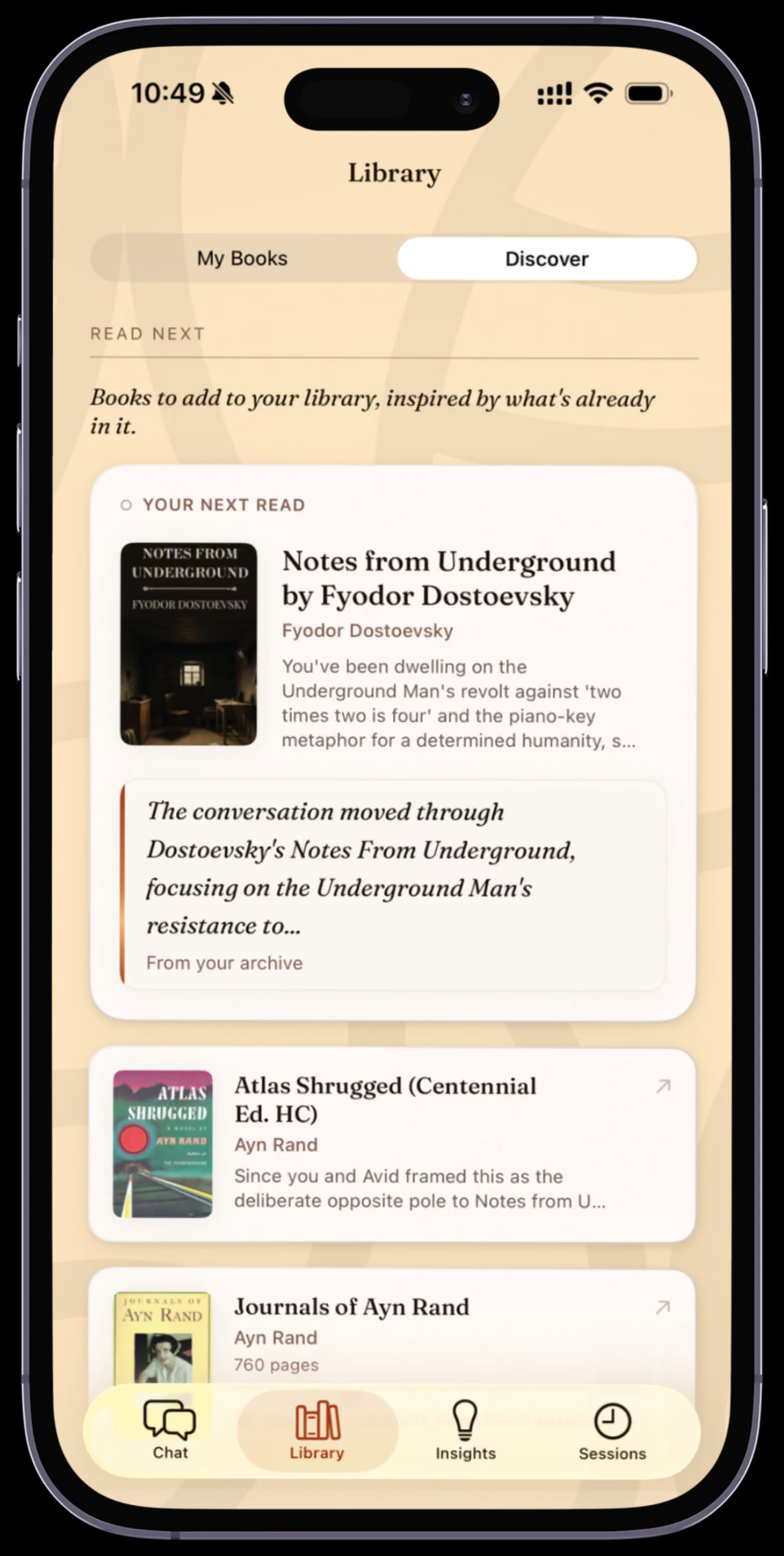
Avid’s reading recommendation interface

Independent product

Strategy / Positioning / Interaction / Visual direction / Shipping

Context

Readers collect passages, notes and half-formed thoughts across disconnected places. Avid began with a more personal question: what would help a book remain active after the page ends?

Problem

Summaries compress the book, while passive highlight storage often becomes an archive no one returns to. Neither creates the conditions for a reader to test, connect and develop an idea.

Pascal’s role

Founder and independent maker—responsible for product strategy, positioning, interaction design, visual direction, implementation and iteration.

Constraints

A solo build, a new product category to explain, sensitive reading data, and the need to make an AI-assisted experience feel like an invitation to think rather than an answer machine.

Decisions

Position reading as an ongoing conversation; keep the reader’s judgement central; import highlights from familiar sources; resurface earlier material when it can create a useful connection.

What changed

From a first mockup in August 2025, Avid reached the App Store in January 2026. It has since grown organically to more than 200 readers across 12 countries, with its first paying readers acquired without paid promotion.

What I learned

A personal product becomes clearer when the interaction model, language and visual system all express the same belief.

Open the full Avid case study
02

Professional practice

Product systems and transformation

2024—now

Context

Within the tax transformation and technology practice of a Big Four professional services firm, the work crosses policy, operations, enterprise technology and groups with different definitions of success.

Problem

Useful product work can stall when ownership is diffuse, data quality is uneven, governance is treated as ceremony, or a technically correct workflow does not fit how people actually work.

Pascal’s role

Product Owner with a Product Manager remit, working across strategy, workflow digitisation, AI-assisted compliance, automation, data quality, governance, adoption and operating-model design.

Constraints

Confidential client and organisational contexts, legacy processes, multiple stakeholders, regulatory considerations and the practical realities of change.

Decisions

Make decision rights explicit; translate ambition into sequenced product work; design governance around real choices; treat adoption as part of the product rather than post-launch communication.

What changed

The practice now has clearer product ownership, structured roadmaps, lifecycle governance, adoption tracking and feedback loops across five core platforms and integrations. The work has also created more deliberate paths from project delivery into stable operations.

What I learned

The quality of a system is revealed at its handoffs—where a policy becomes a workflow, data becomes a decision, or a product meets someone’s working day.

03

Product leadership

Earlier product work

2019—2024

Context

Earlier roles spanned commercial product management, tax technology and product research across the United Kingdom, Nigeria and remote teams.

Problem

Teams need a usable way to connect customer needs, business constraints and delivery decisions without turning product management into a backlog administration function.

Pascal’s role

Product Manager from 2022 to 2024, preceded by product and tax-technology work from 2019—2022—covering discovery, analytics, prioritisation, stakeholder alignment and delivery.

Constraints

Building product practice from the ground up, coordinating a cross-functional team of 12, and balancing commercial, customer and delivery constraints across several product environments.

Decisions

Introduced product analytics and behavioural evidence into prioritisation, established clearer cross-functional delivery habits, and used structured research to turn customer behaviour into product choices.

What changed

A food-waste-reduction product opened approximately £250,000 in additional annual revenue, while behavioural product work contributed to a 15% reduction in churn across e-commerce platforms.

What I learned

Good prioritisation is not just choosing what to build. It is creating shared understanding about why the other plausible things are not being built now.