Keep the reader in the centre.
Avid should not perform understanding on the reader’s behalf. Its role is to ask, remember, connect and make a thought easier to continue.
The book ends. The thinking does not have to.
Avid is a reading companion for people who want to think more deeply about what they read. I conceived, positioned, designed and built it independently, then shipped it as a live iOS product.
Visit Avid ↗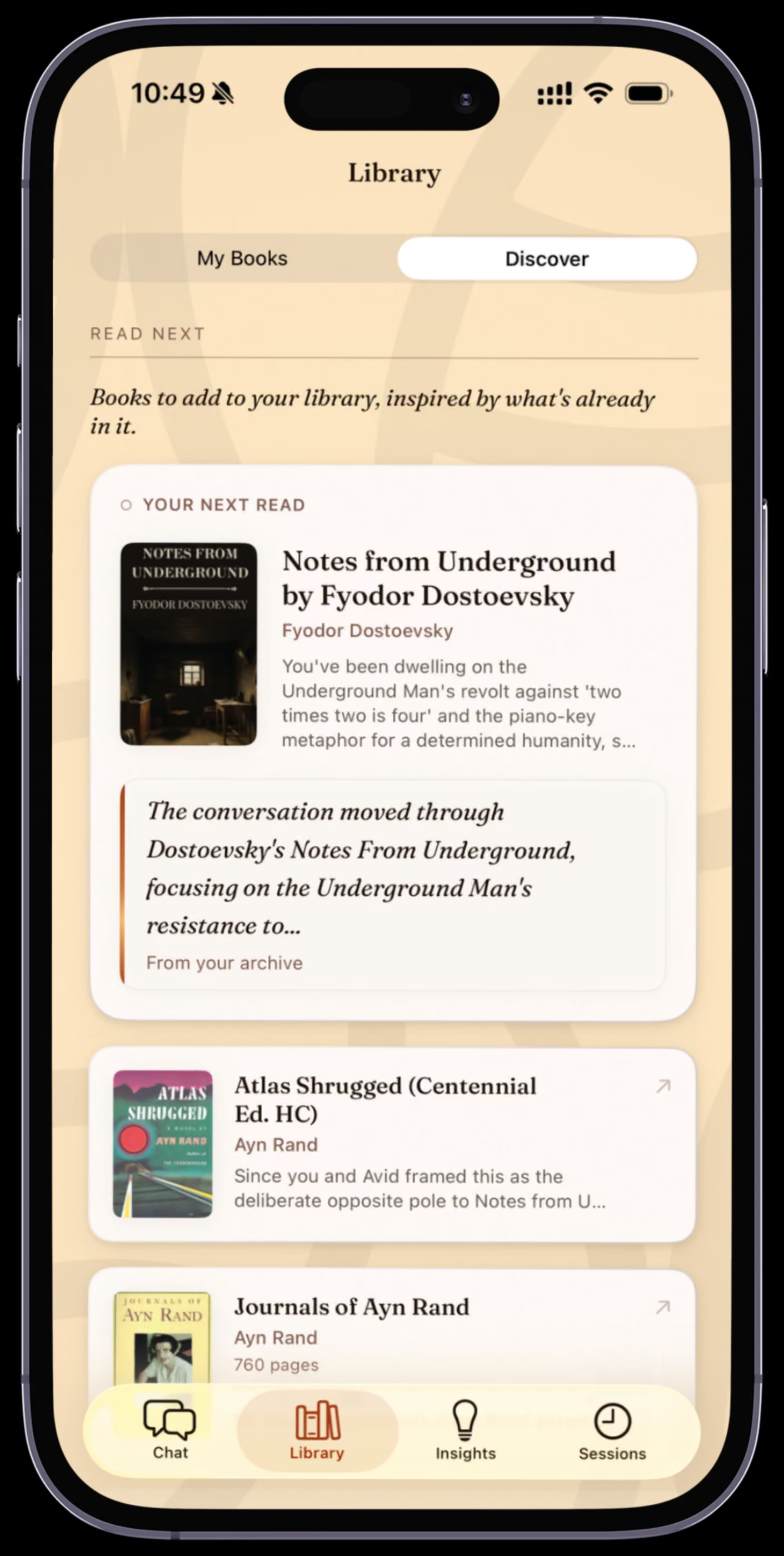
Reading is not complete when the page ends. A book continues in the questions it leaves, the connections it makes possible and the choices it changes.
The familiar tools around reading tend to pull in opposite directions. Summaries reduce a book to conclusions. Highlight tools preserve passages, but often as a quiet archive. One moves too quickly past the work; the other asks the reader to return without creating a reason to.
I wanted a third model: reading as an ongoing conversation. A place where a reader could bring an unfinished thought, test an interpretation, connect it to something read months before and leave with their own idea made clearer.
Avid should not perform understanding on the reader’s behalf. Its role is to ask, remember, connect and make a thought easier to continue.
Highlights, questions and earlier conversations are not storage objects. They become useful when they can return at the right moment.
The interface, language and pacing should lower the friction of reflection without making the experience feel gamified or instructional.
The core interaction is conversational, but the product is designed around continuity rather than chat alone. Readers can import from Kindle, Apple Books, Kobo and Readwise; talk through a passage by text or voice; keep the strongest parts as insight cards; and find connections across books and earlier discussions.
The important decision was not simply to add memory. It was to make memory legible: show why an earlier idea has returned, preserve its source and let the reader decide whether the connection matters.
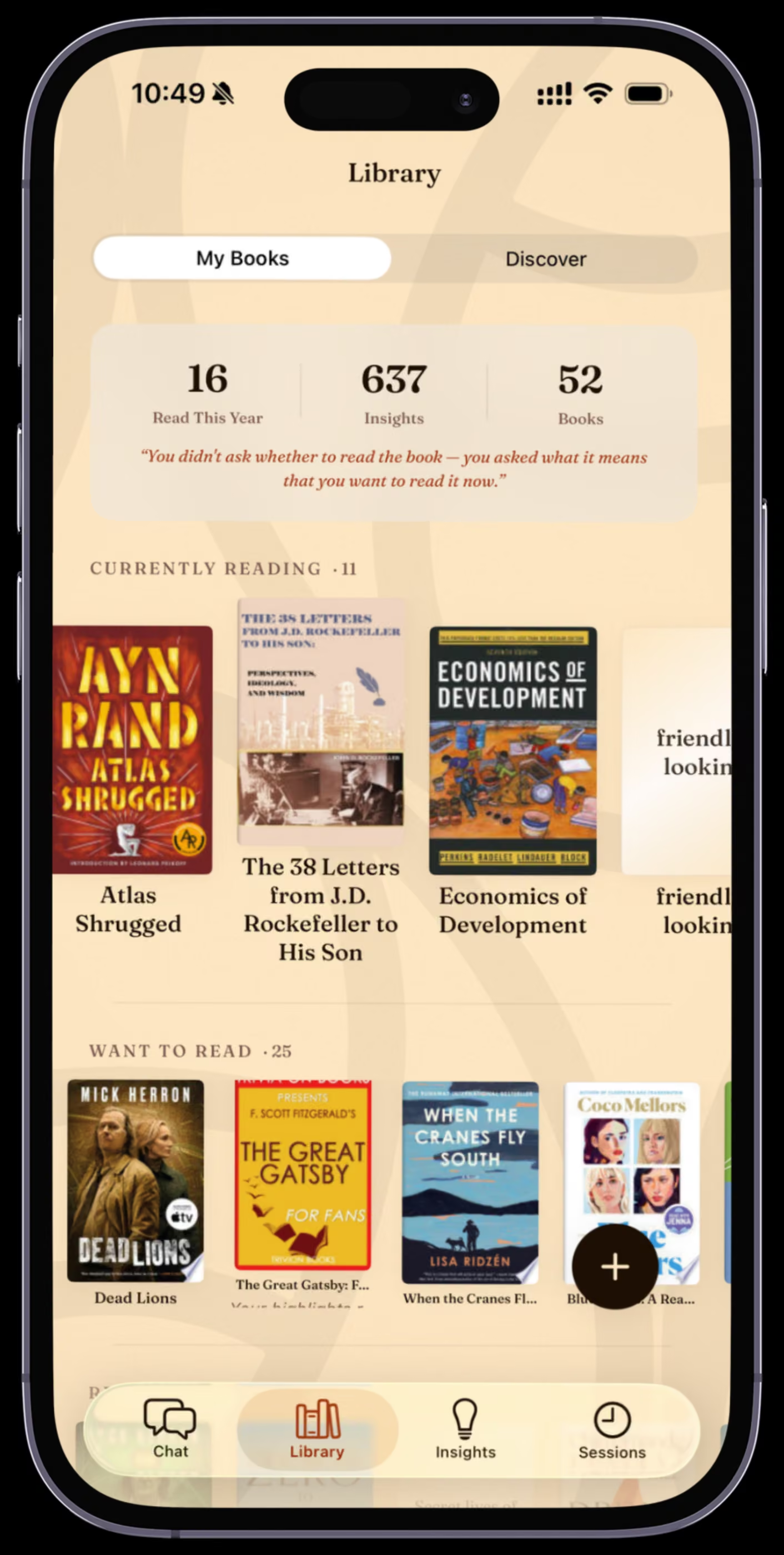
A library that holds books, highlights and conversation together.
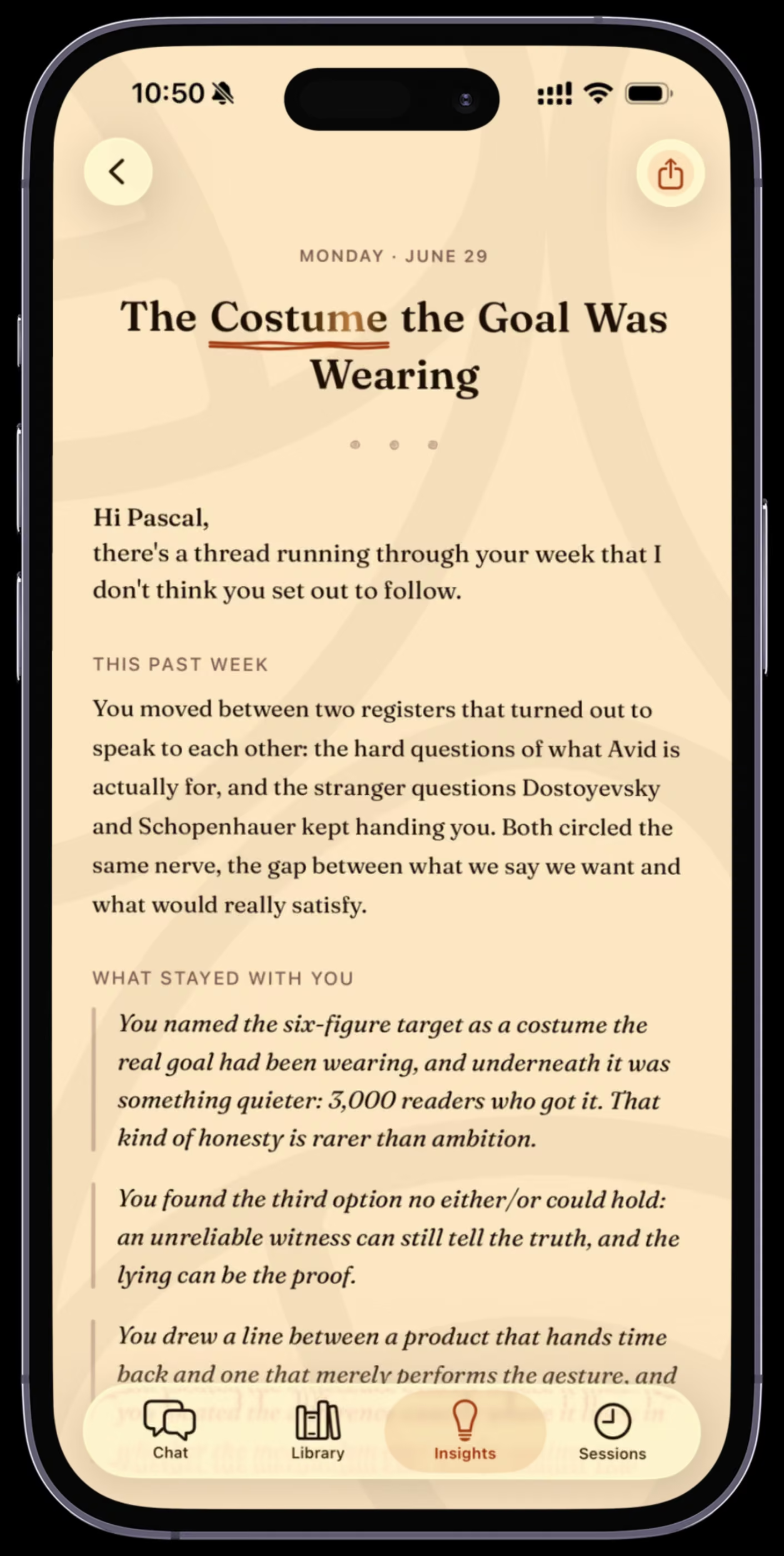
A weekly letter that writes the reader’s own attention back to them.
Building Avid independently collapsed the usual distance between product strategy, design, code, language and support. Every choice had to survive contact with the product itself.
The first mockup became a public iOS release in five months, from August 2025 to January 2026. Since then, the work has continued across highlight imports, voice conversations, book scanning, cross-material connections, the library, Margins and the small reliability details that determine whether a thoughtful experience actually feels dependable.
01Positioning becomes real when it changes the interaction, not only the headline.
02Taste is operational: it appears in defaults, pacing, edge cases and whether a release feels finished.
03Shipping independently makes trade-offs unavoidable—and therefore unusually instructive.